The Scenario: Six Teams, Three Venues, One Very Busy Tournament Director
Rachel has run Somerville Summer Throwdown — a casual ultimate frisbee tournament — for four years. What started as two teams scrimmaging at Tufts expanded to six teams, three field locations across the metro (Danehy Park in Cambridge, Moakley Park on the South Boston waterfront, and the Harvard Athletic Complex on permit Saturdays), and an 18-person organizing committee spread across five teams.
This year's complexity:
- Teams pulling from amateur leagues in Cambridge, Somerville, Brookline, and two South End crews
- Field permit windows: Danehy only available alternate Saturdays; Harvard permits by the hour
- Referee assignments: 12 certified referees, each with their own blackout dates
- A tournament fee of $180/team, covering field permits, equipment, and the post-tournament barbecue
- Bracket coordination across a double-elimination format with rain delay contingencies
- 23 players who needed to confirm jersey sizes before the order closed
Previous years: a Google Form for availability, a Slack workspace that had three people who never checked Slack, and a spreadsheet that only Rachel could edit without breaking the formulas. This year, SquadPlan.
Part 2 — How Each Coordination Layer Worked
Each Team as a SquadPlan Event — With One Parent View
Rachel created a separate SquadPlan event for each team's internal coordination (roster management, internal availability, team expenses), then a separate "tournament operations" event for director-level coordination. This meant captains handled their own rosters; Rachel only managed the cross-team schedule.
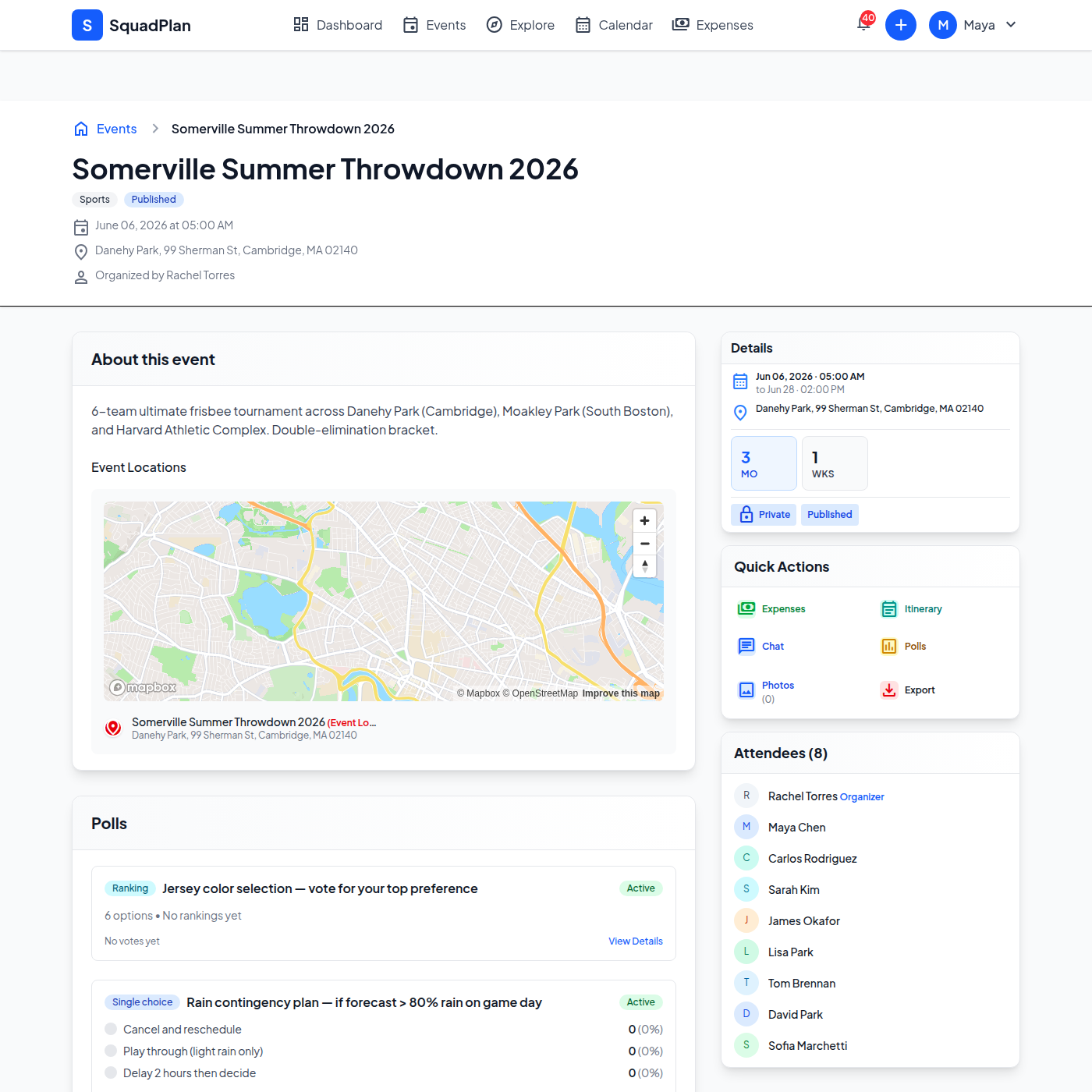
Each team and the tournament operations board as separate events. Captains manage their own; Rachel sees the full picture.
Availability Windows for Game Scheduling — Not Just the Tournament Itself
The uniquely hard part of amateur tournament scheduling: teams aren't all available for every weekend session. The Cambridge squad had a league game the third Saturday morning. One Brookline team had two players getting married the second weekend (to each other — the whole team was invited). Referee availability was completely separate.
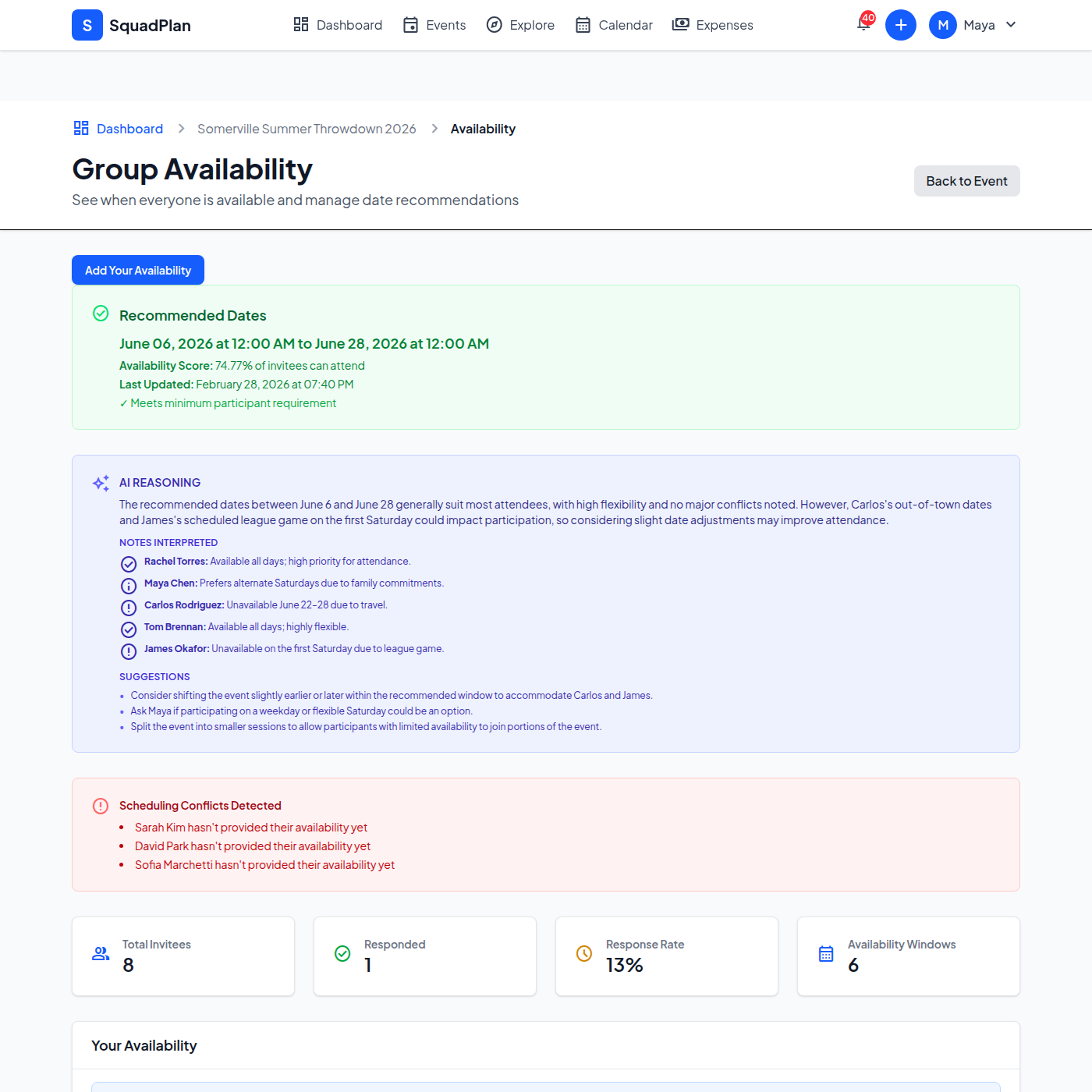
Combined availability view for game scheduling. The overlap analysis let Rachel lock dates for each round that minimized conflicts across all six teams and the referee pool.
Polls for Every Group Decision
Jersey color (surprisingly contentious: three teams wanted red, the polls resolved it via ranked choice). Post-tournament venue (four options, voted on by captains). Start time for championship day. Rain contingency plan (cancel vs. reschedule vs. play through). All resolved in the polls panel without a single email thread.
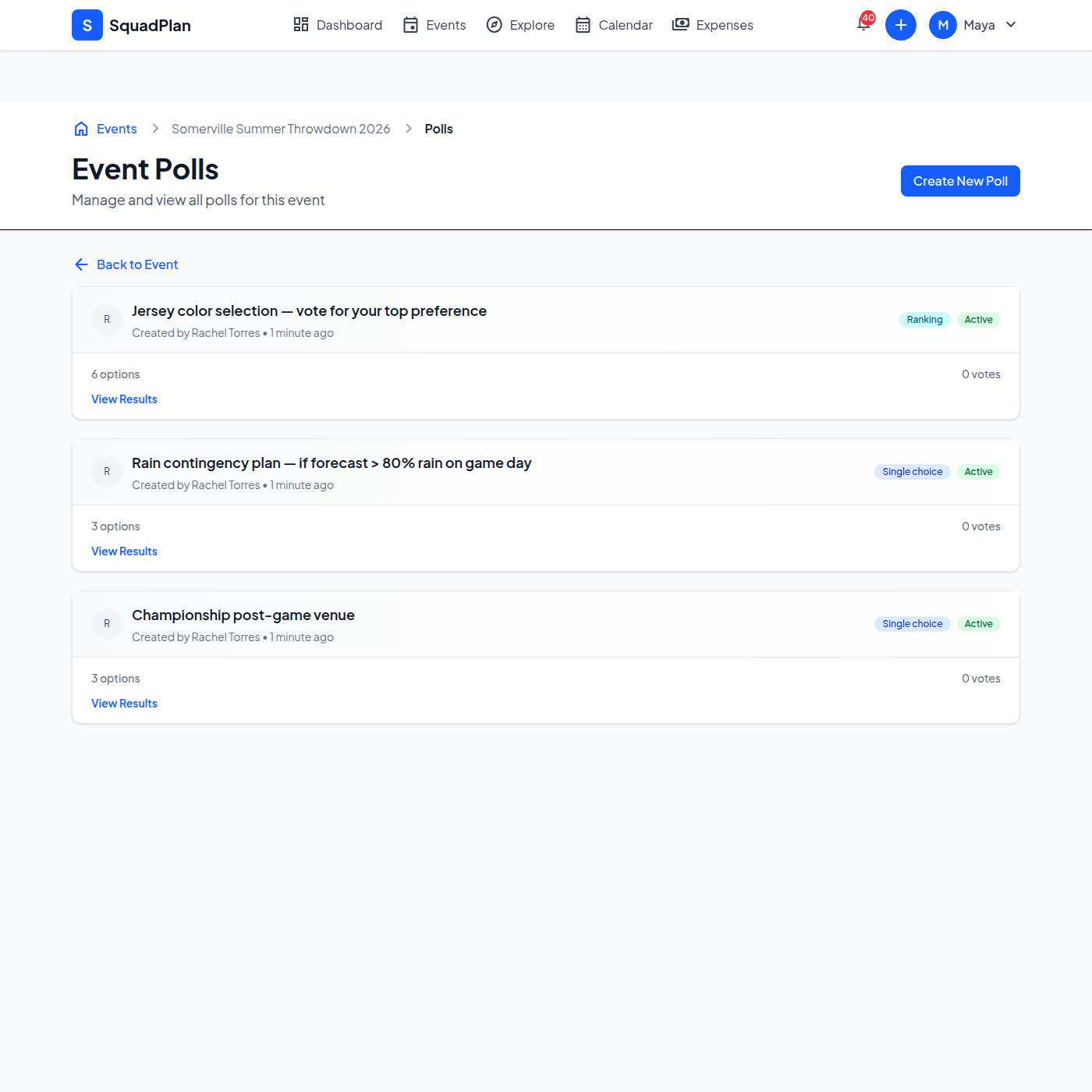
Eight polls resolved over the tournament planning period. Jersey colors, venue votes, schedule preferences — all logged with timestamps and participant breakdowns.
The rain contingency poll. Anonymous voting, 48-hour deadline, and automatic notification to all 18 committee members when results were in.
Tournament Expense Accounting
Tournament finances are messy: teams pay a lump entry fee, but costs hit at different times — permit payments due weeks before the event, equipment purchases, food deposits. Rachel needed each team to know their real-time balance against their $180 payment before the tournament weekend.
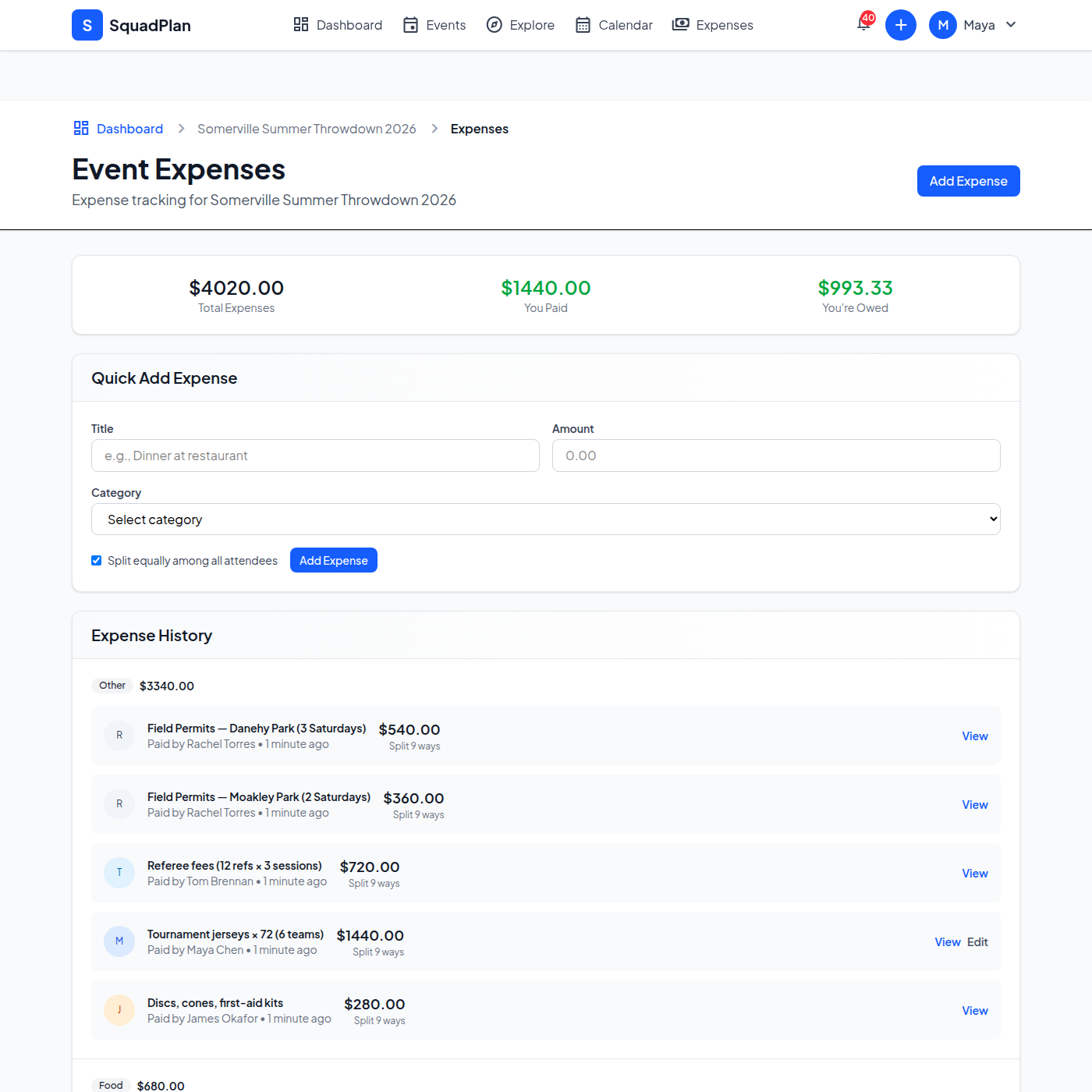
Permit fees, equipment costs, and food purchases tracked against each team's entry payments. Two captains caught their payment was short before the deadline — a first in four years.
Event Group Chat as Tournament Operations Hub
On game days, the group chat replaced a radio. "Field 2 is wet, moving game to Field 1." "Refs are 10 minutes out on the Red Line." "Championship bracket updated in the itinerary." Everyone with the app got real-time updates. Nobody showed up at the wrong venue for the first time in tournament history.
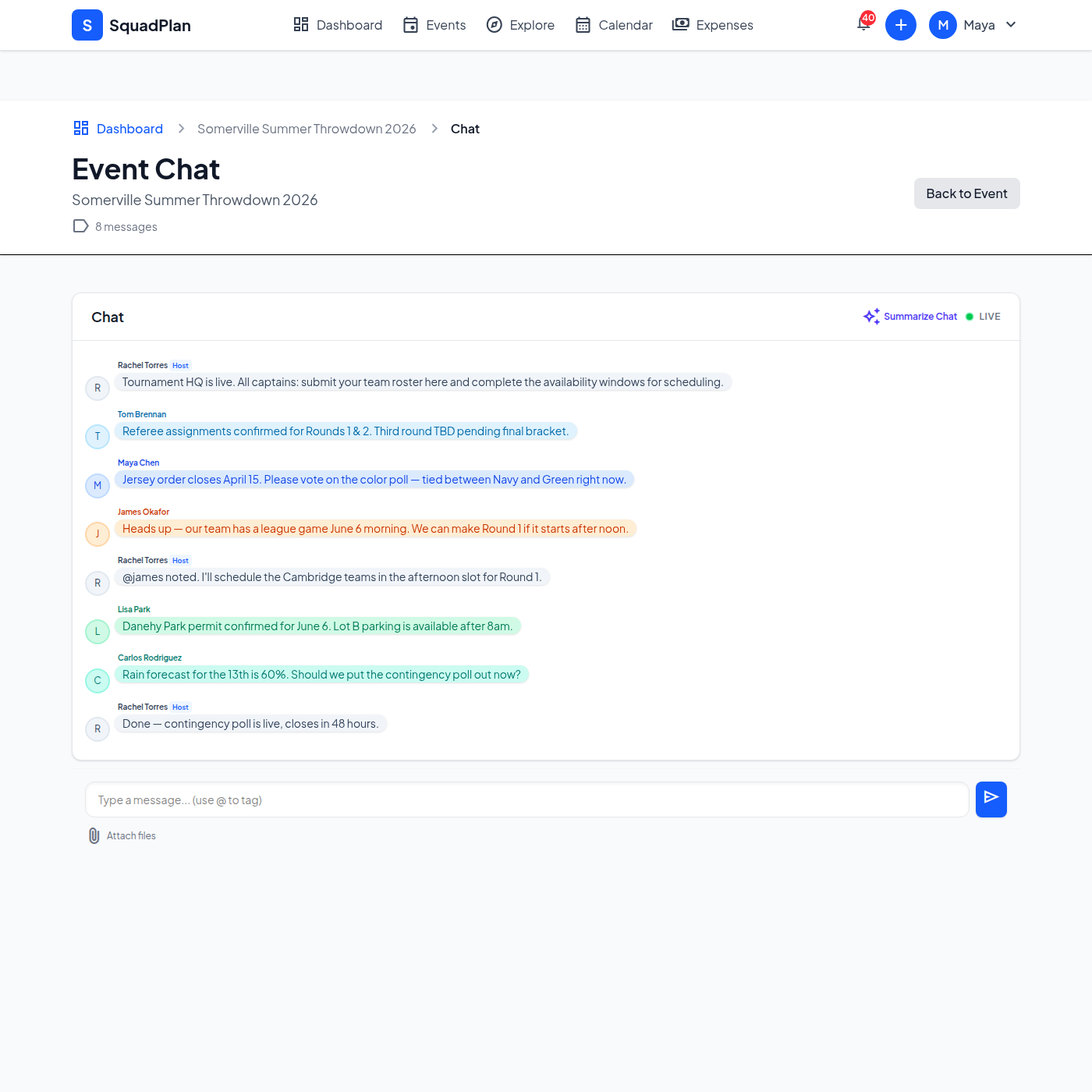
Game-day chat. Venue changes, bracket updates, weather calls — all attached to the event, not buried in a Slack channel that three people don't check.
Somerville Summer Throwdown ran 3 of 3 scheduled weekends, completed the full bracket without major delays, and settled finances within 7 days of the final game. Rachel filed for permits again the following Monday.